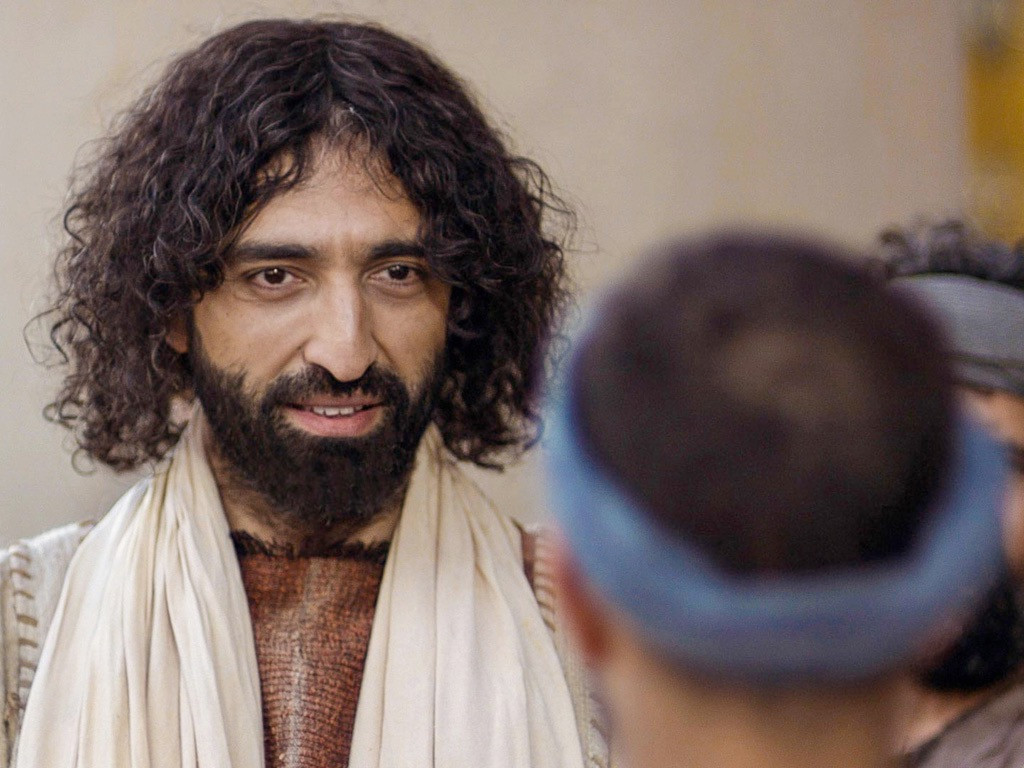
5 Things That Jesus Said That Everyone Would Rather Just Soon Forget

FreeBibleimages :: General images of Jesus teaching :: Pictures of Jesus  teaching crowds, groups and individuals (Matthew, Mark, Luke, John)

We see this all the time: Lopsided and agenda-driven portrayals of Jesus, only partially quoting him and/or quoting him out of context in order to prove a point, rather than to share Christ’s full Gospel.

Yet, I present these to you to help balance what is often a soft-pedaled picture of Jesus who only said things we can all agree on. Jesus isn’t to just to be admired, he is to be worshipped. He certainly is the Prince of Peace who lived a life marked by love, but he’s also the King of Kings who taught a message marked by Truth – and we would do well to remember that.

I present to you five quotes of Jesus that should keep anyone from thinking he is the flower-laden-do-whatever-you-want guru that society wants to paint him as.

Using the English Standard Version of the Bible, I pulled at least one quote from each of the four Gospels. Yes, I will provide some context with each verse, but if anything – I do so just to further emphasize these statements are clear on their own.

And so, here are five things that Jesus said that everyone would rather just soon forget.

Matthew 7:21

“Not everyone who says to me, ‘Lord, Lord,’ will enter the kingdom of heaven, but the one who does the will of my Father who is in heaven.”

Simply put, calling Jesus “Lord” does not prove he truly is your Lord, nor does it convince Jesus that you see him this way. Actually obeying God is how we show that we truly love and trust Christ with our hearts, lives, and salvation. Of course, we will never do this perfectly, which is exactly why we need a savior in the first place.

Matthew 10:33

“…whoever denies me before men, I also will deny before my Father who is in heaven.”

Personal, yes, but Jesus is not in the business of his followers having a “private” faith. Without question, Jesus wants us to be peacemakers. Without question, Jesus calls us to be humble and kind. But make no mistake, Christians are meant to shine the light and make disciples – and that means, announcing his name as the name above all names. If we don’t align ourselves with him in the presence of men, then why would Christ align himself with us in the presence of God?

Mark 1:15

“The time is fulfilled, and the kingdom of God is at hand; repent and believe in the gospel.”

Oh, the word we want others to live by, but seldom do ourselves: Repent. Jesus called people to repent; to turn from their sin and to believe the gospel. Jesus did not call us just to love, he called us to repent; to turn from the life we are living and to follow him as we trust in the promises of the Gospel for salvation and eternal life.

Luke 14:33

“So therefore, any one of you who does not renounce all that he has cannot be my disciple.”

Wow… wait, Jesus. What about the American Dream? What about being with who we love? What about, what about, what about…? Jesus is clear in this: He is to be before all things in our lives. To renounce does not mean live with nothing, it does not mean don’t get married and have kids, it does not mean go live out the rest of your days in solitude as monk in a monastery… It does not specifically mean any of those things, but here’s the notion – it might. In Luke’s account, the word used for ‘renounce’ is “ἀποτάσσω” (apotassó) and it means “to bid farewell, to take leave of,” meaning, we are to lay aside the life we’re living and follow Jesus in his way of life.

This is the beauty of discipleship, we all are to follow Jesus and to place everything a his feet. Yes, each of our lives as a disciple of Jesus will have some distinction (some called to be pastors, missionaries, stay at home moms, school teachers, but all laying all things before his feet) as we yet have complete unity in him. What we must always do, especially with verses like this, is to hold them in the light of the full breadth of Jesus’ teaching – and when we do we’ll see the clear message: Christ is to be first in our lives.

John 10:30

“I and the Father are one.”

We hear it all the time: “But Jesus never claimed to be God.” Wrong! Truly, you won’t find the exact words “I am God” in that exact order ever attributed to Jesus anywhere in the Bible. But this is because we get an even more profound and pronounced statement from Jesus: He and the Father are “one.”

Notice, Jesus doesn’t say, “I am the Father” and he doesn’t say, “I and the Father are the same.” Rather, Jesus, using language with which we can begin to understand the Trinity, says, “I and the Father are one.”

If you think that this is too vague, then you’re not understanding the context. When Jesus said this, he was almost immediately killed for it because His first audience knew exactly what he was saying: Jesus was claiming to be God. It’s hard to overstate how much this changes everything: If this is true, then Jesus Christ is not just a prominent historical figure, he is the most important person who will ever have lived. If Christ is God, this nullifies every other religion, philosophy, or ethic.

There should be no submission to following Jesus’ teaching that doesn’t includes a discussion about his most defining claim: That he and the Father are one, that he is God in the flesh. If God, Jesus should be worshipped. If lying, Jesus should be forgotten.

WORDS GOT JESUS KILLED

Remember, it wasn’t what Jesus did that led to his crucifixion. It was what he said. Jesus was crucified for blasphemy.

People want to look only at Jesus’ life (and a perfect life, it was), but we must also reckon with what Jesus said: All of what he said. Our lives are to come into conformity with him and what he taught; not the other way around.

And so, while these five verses may be challenging, even feeling like Jesus is drawing a line in the sand, we must also see their power as they beautifully demonstrate why Christ is like none other – and personally, why I put my faith in him and none else… even if some of his teachings are massive challenges to both my heart and the status quo.

So, these may be things that Jesus said that everyone would rather just soon forget, but these are words of Jesus that make it so we can’t forget him – but rather, so that we put all of our trust in him.


Obadiah: Hope & Warning

This sermon series on the Old Testament book of Obadiah was preached at Peace Church in the Fall of 2025. It is a verse-by-verse walkthrough of the little known prophet, Obadiah, the 31st book of the Bible and the shortest book of the Old Testament. So short, it has no chapters, only verses.

This is the promo video for this sermon series:

Here is some context for this prophet, taken from the first sermon…

The writer of this prophecy is a man named Obadiah. His name means “servant of Yahweh.” Yahweh being God’s divine name He revealed in the Old Testament – and while there are number of Obadiahs mentioned in the Bible, none refer to this prophet. All we know about him is that he delivered this prophecy, or “vision” as he calls it. 

Now, this is a prophecy that was specifically given and pointed at one country: the country of Edom. Located to the southeaster of Jerusalem, Edom was outside of Israel and Judah, but God brings a harsh message for them – and it’s because of what they’ve become – and what they’ve done. 

_____

Obadiah 3
“The pride of your heart has deceived you…”


_____

EDOM: WHAT THEY’VE DONE & BECOME

This sermon series explores the harsh truth of what Edom has done and the painful reality of what they’ve become, and what God is going to do about it. Even though this prophecy was delivered probably in the mid-500’s BC (there is some debate about that), its message is incredibly relevant for our day and age. 

May this sermon series both challenge your faith to grow to follow Jesus more faithfully, and encourage your faith to follow Jesus more fully.

_____

OBADIAH SERMON 1 OF 3:
THE WARNING OF JUDGEMENT
OBADIAH 1-9 

SERMON 1 MAIN IDEA:
God warns us that He will cut down those who boast in their pride

SERMON 1 OUTLINE:
God warns us against pride because:
1. Pride dooms us (vv1-2)
2. Pride deceives us (vv3-7)
3. Pride destroys us (vv8-9)

_____

OBADIAH SERMON 2 OF 3:
THE WARNING OF JUSTICE
OBADIAH 10-18 

SERMON 2 MAIN IDEA:
God’s justice is found in His judgement

SERMON 2 OUTLINE:
1. God judges sin to bring restoration (vv17-18)
2. God judges sin of omission (vv10-11)
3. God judges sin of commission (vv12-14)
4. God judges sin to bring justice (vv15-16)

_____

OBADIAH SERMON 3 OF 3:
THE HOPE OF JOY
OBADIAH 19-21 

SERMON 3 MAIN IDEA:
God shakes things up to reveal the hope of joy

SERMON 3 OUTLINE:
1. God changes things
to bring conformity to his plan (v19)

2. God redeems people
to restore justice to the land (v20)

3. God speaks prophecy
to foreshadow salvation to the world (v21)

_____

OBADIAH 20-21

20 The exiles of this host of the people of Israel
    shall possess the land of the Canaanites as far as Zarephath,
and the exiles of Jerusalem who are in Sepharad
    shall possess the cities of the Negeb.
21 Saviors shall go up to Mount Zion
    to rule Mount Esau,
    and the kingdom shall be the Lord’s.

AMEN.

Contender: Jude’s call to fight for the faith

This 4-part sermon series was preached at Peace Church in February 2025. It’s a study and walkthrough of the second to the last book of the Bible, Jude, looking at Jude’s call for Christian to contend for the faith. Below you’ll find a link to each full sermon, plus a quick reference for each sermon’s main idea and outline.

This was the series promo video for Contender: Jude’s Call to Fight for the Faith

_____

Jude 3
“Beloved, although I was very eager to write to you about our common salvation, I found it necessary to write appealing to you to contend for the faith that was once for all delivered to the saints.

_____

What is This Call to Contend?

From the first sermon, The Fight is Now:

“…let’s ask the obvious question: “What does it actually mean to contend for the faith?” The answer lies in the word “contend.”

Despite seeing this English word a few verses later in Jude, the original Greek verb Jude uses (ἐπαγωνίζομαι) is a word we only find once in all of the Bible… and here’s a definition:

Derived from the preposition ἐπί (epi, meaning “upon” or “over”) and the verb ἀγωνίζομαι (agonizomai, meaning “to struggle” or “to contend”). The Greek verb Jude uses for “contend” describes a vigorous and determined effort, a struggle or contest. It conveys the idea of striving with intense focus and dedication…

OK Christians in the house, let me challenge you – do any of those words describe how you live out your faith? “Vigorous”? “Determined?” “Striving with intent focus”?

I think it’s both safe and sad to say that many Christians are not contending for the faith, we’re just comfortable in our faith or worse, we’re complacent…” 

Christians are not called to comfort or complacency – we are called to contend. This is Jude’s call, and that is what this series was all about.

May these messages both challenge and encourage your faith.

_____

Contender Sermon 1 of 4:
THE FIGHT IS NOW

JUDE 1-4 

Sermon 1 of 4 Main Idea:
Contend for the Faith Because the Fight is Now

Sermon Outline:
1. The fight is now,
so be unified (vv1-3)

2. The fight is now,
so be holy (v4b)

3. The fight is now,
so be aware (v4a)

_____

Contender Sermon 2 of 4:
THE JUDGEMENT IS REAL
JUDE 5-16

Sermon 2 of 4 Main Idea:
Contend for the Faith Because the Judgement is Real 

Sermon Outline :
1. The judgment is real
upon all creation (vv5-7)

2. The judgment is real
so be on guard (vv8-13)

3. The judgment is real
because so is justice (vv14-16)

_____

Contender Sermon 3 of 4:
THE PURPOSE IS PERSONAL
JUDE 17-23

Sermon 3 of 4 Main Idea: 
Contend for the Faith Because the Purpose is Personal

Sermon Outline :
1. The purpose is personal,
so it will affect you (vv17-19)

2. The purpose is personal,
so stay in God’s love (vv20-21)

3. The purpose is personal,
so remember your mission (vv22-23)

_____

Contender Sermon 4 of 4:
THE GLORY IS FOREVER
JUDE 24-25

Sermon 4 of 4 Main Idea:
Contend for the Faith Because the Glory is Forever

Sermon Outline:
1. The glory is forever, so contend because
God is your strength (v24a)

2. The glory is forever, so contend because
joy is your hope (v24b) 

3. The glory is forever, so contend because
Heaven is your future (v25)

_____

Jude 24-25

Jude’s Closing Doxology

24 Now to him who is able to keep you from stumbling and to present you blameless before the presence of his glory with great joy, 25 to the only God, our Savior, through Jesus Christ our Lord, be glory, majesty, dominion, and authority, before all time and now and forever.

Amen.

When a Teen Daughter Wants to Bring Her Teen Boyfriend to Church

couple-4295383_1280

I’ve served in ministry and in church long enough to see this scenario quite a few times: a teenage girl bringing her teenage boyfriend to church. I’ve seen parents handle this situation in many different ways.

By the way, I have yet to see this the other way around (a teenage boy bringing his teenage girlfriend to church), but that’s a different blog post.

Let me share my thoughts as a pastor for when your daughter brings her boyfriend to church.

THE GOOD

Okay, so that I’m not overtly negative and give away my general take on the situation—here are some redeeming points and positive arguments for a teen girl bringing her teen boyfriend to church.

  • Parents, you get to see firsthand how Mr. Teen-Boy responds to the worship service. Is he engaged in the singing? Does he listen well to the preaching? Is his Bible open on his app or in his lap? How does he interact with strangers?
  • Parents, you get to have a shared experience with Mr. Teen-Boy beyond simple interactions with your daughter. This gives you something of substance to talk about (besides your daughter). Forget the weather or the Final Four—now you can get an insight into just how much of the church service was his focus.
  • And I would say most importantly, Parents, you get a front-row seat to see whether Mr. Teen-Boy enhances or distracts from your daughter’s ability to grow in and worship God. You’ll be able to tell if they’re more focused on each other or on the true reasons Christians gather for church (to worship God and fellowship with other believers). If they’re touching each other, that likely means they’re distracted (and if you were ever a teenager, you know this from experience).

Parents, what else would you add to this section?

THE BAD

If Mr. Teen-Boy is a Christian from a church-going family, then the fact that he’s with your family means he’s not worshiping with his own family. Sure once or twice isn’t the end of the world, but simply put, teenagers need to experience the church worship service with their own families. Parents remain the primary influence on their teens, so don’t lessen their ability to have that influence by allowing him to worship with your family. He should be with his family, both his home family and his church family.

Again, a periodic visit is not the end of the world, but it should not become the norm.

Only about 2% of people marry their high school sweetheart. Point being, don’t taint your daughter’s worship experience by introducing an emotional presence that, in all likelihood, won’t be around for the long haul. Even if they do stay together and get married, I’d still argue that the healthier approach is for teenagers to attend church with their parents.

This is actually a primary reason why, as you’ll see, I’m generally against teenagers bringing a boyfriend to church.

Parents, what else would you add to this section?

THE UGLY

The heart of the issue is whether or not he’ll be a distraction to your daughter, and by extension, your whole family. If he’s really there just to be with your daughter, that will be his focus – and that is part of “the ugly” of this whole conversation.

But I can already hear parents putting up the defense, “But, but, but this boy doesn’t come from a Christian family—we may be his only chance!” Firstly, that’s not true. God is bigger than that, but also, let’s address a few things here:

  • Setting aside whether or not teens should date in general, your daughter shouldn’t be dating him if she’s a Christian and he’s not (2 Corinthians 6:14).
  • Remember, Dad, you hold your daughter’s heart in your hands. You are to care for her tenderly, love her fully, and raise her righteously. As you raise her, you’re also showing her the type of man she deserves – and so, are you showing her the qualities of the type of man she should be looking for, starting with a commitment to faith in Jesus? If she’s at the point of dating, then you need to be clear on not just who she should be open to dating, but the purpose of dating: Is it simply about having fun because this is what teenagers do at this age, or is it about learning how to discern who would make a great future husband?

A CHRISTIAN BOY FROM A NON-CHRISTIAN FAMILY

Here’s another scenario: What if he’s a Christian but his family is not. If that’s the case and he’s brought into you and your daughter’s life, then here’s a few notes:

  • The hard part of this would mean that he is growing up in a family that very well may be a kind and loving family, but is not a Christian family and so he’s not getting modeled in the home what makes Christian families different: Praying, devotion, Christian values, church involvement, etc. This doesn’t mean he and your daughter do not have a future, but it does mean you have a chance to speak Truth into his life that he’s not getting at home.
  • So, make sure he’s at youth group, connecting with other Christians his age and faithful Christian mentors helping him to truly growing in faith.
  • This should go without saying, but invite his family to church!
  • Fathers, if things are getting serious and you want to help disciple him, then consider joining a men’s group with him where you can continue to pour into him and be the Christian parental influence he doesn’t have. Or, if that’s too awkward, connect him with a godly man who will disciple him beyond Sunday mornings. Again, this may be too serious of an involvement for a teen relationship, but the reality is – if they are in a relationship, then your daughter’s heart is being affected, and you – Dads – are to protect your daughter’s heart. So protect her heart by making sure that which is affecting her heart is a positive influence.

Parents, what else would you add to this section?

In Summary

As you enter into these possibilities, don’t forget the power of prayer as you pray for the boy that your daughter wants to bring to church. And if you do decide to have him come to church with your family, for the love of all that is holy, don’t let them sit next to each other!

Parents, at the end of the day, my honest assessment is that unless engagement is a real possibility, don’t allow it. In my experience as both a father, youth pastor, executive pastor, and now lead pastor – teenagers are too quick to entangle their hearts with dating, and the spiritual environment of church is meant to deepen fellowship, friendship, and relationship with those who go to church together – So, is your daughter ready for that added element in her dating relationships – because these sorts of experiences just further add to the depth of heartache when/if their relationship ends.

I know my take may seem harsh and unpopular, and your daughter will likely get mad (probably), but this is where you can explain everything mentioned above. It has nothing to do with him as a human, a gentleman, or being “such a nice boy.” This is about what’s best for your daughter – and for him. As I mentioned earlier, this kid needs to be attending church with his family—that’s where he’ll grow the most mature and, ultimately, be a better man for your daughter.

Again, I am giving my opinion and general principles and observations. Yes, there are exceptions to every rule. So, what are your thoughts? Am I being unrealistic, old-fashioned, or spot on?

Parents, what’s your good, bad, and ugly—and what’s your family’s assessment of the situation?

Have I Run Too Far to Get Home? The Gen X Gospel 

No one in the GenX generation can hear the words “Into the flood again…” without immediately hearing in their head Layne Staley’s once-in-a-generation voice singing the next line: “…same old trip it was baaaaack then!” This, known to all GenXers, comes from the song Would? by the ’90s band Alice in Chains. Alice in Chains is one of GenX’s four horsemen of the Grunge Apocalypse, along with Nirvana and Pearl Jam, but I’ll let the GenXers out there debate about who should claim that next spot—Soundgarden or Stone Temple Pilots (but that’s another blog post).

Back to the song: For me, one of the most passionate lyrical lines to ever come out of the grunge era is found at the end of Would? when Staley belts out in his grunge-defining voice the existential question: “Have I run too far to get home?”

He’s not talking about losing track of where you’re jogging because you got distracted by some self-help podcast. It’s a desperately honest question posed with the rawness that could have only come from the early ’90s. In many ways, this was the GenX way of asking the eternal question: “Am I beyond saving?”

THE GOOD PLACE

“Have I run too far to get home?” succinctly voices the burning desire in every heart to return to “the good place”—the place where things are as they are meant to be. However, we are often inhibited from finding it on our own because doubts arise that block the way, and so many of us give up, letting questions go unanswered.

In our hearts and souls, we all know this simple truth: there is a true way that things should be, and we know this because the world as it is, is not it. The beauty of this lyric, “Have I run too far to get home?” lies in recognizing that not only is there truly a “home”—an ideal place where things are as they are meant to be—but that losing it is something we are capable of doing.

And for those who are honest, the same can be said about our own souls: something is wrong on the inside. If you don’t think so, then I would ask if you’d be open to playing out loud every unfiltered thought you’ve had in the past 24 hours. Gonna pass on that? Yeah, I thought so. We all know that nobody is perfect and that there is brokenness in us all—and Scripture calls this sin. But is it possible to reclaim what was lost, to make new what was broken, or to right what’s been wronged? Is it possible to be saved from our sins?

Or have we run too far to get home?

THE GENERATION KNOWN AS X

I am the last of the Generation X. Just making it into the 70’s by being born in the summer of ‘79, I grew up in a time caught between the old world of the Boomers and the emerging technological world of the Millennials. With more than any previous generation had, we stilled shared a cultural angst because we were the generation positioned perfectly to question why we needed the old when everything felt new and yet, we knew the new had no more answers than the old. And with every reason to rebel, we did, and so were labeled, Generation X.

For many GenXers, our perceptions of faith, and particularly of Jesus Christ, were tainted and warped by growing up with a traditionalism that seemed to lack substance—a belief system that appeared divorced from reality. But unlike previous generations, we weren’t going to follow suit. We weren’t going to follow tradition for the sake of tradition. We were called Generation “X” for a reason—because no one was going to tell us what to do.

Too many of us were dragged to church growing up but never told why. So, when we had the option, we stopped going, …but the questions lingered. Rather than turning to God with our questions, we threw on our flannels, turned on the half stacks, and screamed our doubts over distortion-laden power chords as we cried out, “Have I run too far to get home?”

Thus, we abandoned church and, with it, the seemingly hollow pulpits that spoke of things we didn’t have the ears to hear. The angst of ’90s grunge spoke to the frustrations we were feeling, because with no source of Truth, we were left singing questions we couldn’t find answers to… yet the answers were there all along, if we were willing to look past the religiosity and simply see the power of the Resurrection of Christ.

RIGHT QUESTIONS STATED IN CODE

We asked how to get “home” because we wanted to be where things are as they should be, but while the desire was right, the question was wrong—or at least, coded.

During the Last Supper, Jesus was asked a probing question about how and who would see Him after He had departed from this earth, and this was His answer:

Jesus answered,
“If anyone loves me, he will keep my word, and my Father will love him,
and we will come to him and make our home with him.” 
John 14:23

The question of “Have I run too far to get home?” is emphatically answered by Christ with a resounding No! Because salvation is not about going home; it’s about God making a home in us—through the love of God found in the sacrifice of Jesus Christ; that is, through the Gospel.

Let’s break down what Christ said:

  • “If anyone loves me…” 
    This is the foundation of our salvation in Christ and our relationship with God: Love. Simply and beautifully, love. We are called to love Christ first, above anything in this world, including ourselves.
  • “…he will keep my word…” 
    This is about more than just ‘believing the Bible.’ It’s about trusting in the promises Christ has made. To love Christ is to obey His teachings. To keep His word means turning from our own wisdom and placing all trust in God. It’s about repenting of our ways and wisdom in order to follow God’s way, so that we will “keep” God’s Truth and not our own.
  • “…and my Father will love him…”
     Before you get turned off because this sounds like God’s love is conditional, let’s see how this is actually powerful. This is not about just mentally assenting to the fact that God loves us; it’s about actually experiencing it. To love God’s Son and trust in God’s Word is when and how we truly come to know and realize God’s personal love.
  • “…and we will come to him and make our home with him.” 
    Here is the difference between the Christian faith and all others—what Jesus says here shows us that Christianity is about a relationship with God. What better way to symbolize the togetherness of our relationship with God than by equating it to a home, living together—not just being roommates, but being family with God as our Father and Jesus as our Brother and Savior.

NOT ABOUT GOING, BUT TURNING

The answer to the question, “Have I run too far to get home?” is No because the beauty of the Gospel shows us that we are saved where we are, in our sin and shame. It’s not about cleaning up or going home; it’s about turning to Christ and receiving what he has done for us.

The truth is, it’s not about us getting home. The Gospel is about Jesus leaving His home. Christ left His throne in heaven to step into creation as the God-man on a rescue mission to save us—and to save us in our sin, from our sin. As Romans 5:8 tells us, “God shows his love for us in that while we were still sinners, Christ died for us.” Meaning, salvation is not found in “going home” or in actually “doing” anything, but in simply trusting what Christ has done for us. This is called grace—because it’s given, not earned.

Christ did for us what we could never do for ourselves. His death was the sacrifice that paid for our sins, and all we are left to do is simply receive and respond.

THE GENX GOSPEL

If GenX’s question about our salvation is summarized by asking, “Have I run too far to get home?” then the GenX translation of the Gospel would be this: Our salvation is not about getting home, but about God making His home with us.

So, turn from your sin, call upon the name of Christ, see the love that God has for you in the Gospel, and know that, no, you have not run too far to get home.

When a Little Boy in Uganda Asks You Questions…

I recently received this letter from Moses, one of the sons of Sarah Jantzen. Sarah is one of our church’s global missionaries, serving in Uganda. I felt very honored to receive this letter and was excited to help him out! I’m sharing this with his and his mom’s permission.

[Here is Moses’ letter]

How are you today?

I am writing to you to see if you can help me with a school project. I want to learn how to be brave, strong and faithful as a young man of God. My project is called “A Godly Man” and I have been studying 1 Timothy 3:1-9. You came to my mind when I read this passage because you are self-controlled, gentle, able to teach, respectful and not quarrelsome. 

I want to see how you can help me grow into a man like you are. Also, when I was baptized, I learned that baptism is not just something that would help me suddenly be godly, but I learned that baptism is something that starts out demonstrating a godly life.

If you are willing or able, could you please answer the following questions and send them back to me?

[Here is my response]

Hi Moses!

I am so honored that you would ask me to answer such amazing questions. I’ll do my best to provide helpful responses!

1. What advice do you have for a boy like me who wants to become a man like you?

The best advice I can offer is to stay actively involved in church and surround yourself with Christians you admire. Of course, read your Bible, pray, and always remember that Jesus Christ is proof that God loves you (John 3:16). Don’t ever forget that through the Holy Spirit, God will be with you through both the highs and lows of life (John 14:16-17).

2. What important lessons has God taught you?

The most important lesson God has taught me is that, before anything else in life, He needs to come first – not just in my life overall, but in everything I do. God must be the foundation and the reason for everything I have to do and get to do; it all should be for His Glory. (1 Corinthians 10:31, Colossians 3:17). 

3. When you’re angry, how do you control yourself?

When I’m angry, I control myself in four ways:

  1. First, I ask the Holy Spirit to step in and take control of my anger (Galatians 5:16-25).
  2. Second, I imagine Jesus standing beside me and ask myself, “Is this how I want Jesus to see me acting?” (Matthew 28:20).
  3. Third, I remind myself that while anger isn’t necessarily a sin, it can lead to sin. So, I think carefully about whether my anger is justified and, if so, how I can express it in a way that honors God and others (Colossians 4:6, 1 Peter 3:15, James 1:26, Proverbs 25:28).
  4. Finally, I ask myself, “Is this the kind of man God is calling me to be?” Is He calling me to be an angry man, or a man full of love and patience? Then, I return to point one and ask the Holy Spirit to help me become the man God has called me to be (Ephesians 4:30, 1 Timothy 6:11-12).

4. What do you do when others around you are quarrelling?

I try to be a peacemaker, as Jesus calls us to be in Matthew 5:9. I do this not by immediately taking sides, but by first trying to understand both perspectives and then helping people meet in the middle or see things from each other’s point of view (Romans 12:18). But remember, you can help people, but you can’t control how they respond (Proverbs 29:11). 

5. When Satan disturbs you, how do you fight him?

The Bible says that the Word of God is our sword (Ephesians 6:17) and so when Satan attacks, I do what Jesus did – I refute him with Scripture (Matthew 4:1-11, Luke 4:1-13)! This is why it’s so important to know your Bible and memorize as much Scripture as you can (Psalm 119:11). But also, I fight him with prayer (Ephesians 6:18, Mark 9:29, James 5:16), and by going out and sharing even more about Jesus (Ephesians 6:15, Revelation 12:11)! 
*Also check out Ephesians 6:11 and James 4:7.

Moses, these were great questions. They challenged me and helped me to think even deeper about the type of man God is calling me to be. I hope my responses are of great encouragement to you, Moses. 

I am praying for you!

In Him,

Pastor Ryan Kimmel
Peace Church

My Advice for the Devil

The devil in the detail

Let me literally play the Devil’s advocate here and help him refine his approach to attacking and undermining modern American Christians and Christianity. As a pastor, I’ve personally seen what works, and so I’d offer these tips in helping lead Americans away from God, the Gospel, and the Church.

So, here are my five quick pieces of advice for the Devil to be more effective:

1. MAKE SUNDAY MORNING SPORTS MANDATORY

Most Christian parents have already demonstrated they’ll do whatever youth sports require, so just double down on getting sports to happen on Sunday and particularly, Sunday morning. Keep them thinking that as long as they “catch the service online,” it’s a suitable substitute because they already have the “church attendance doesn’t save you” card in their back pocket. It’s paramount the kids see this modeled and also that you never let families see the long-term consequences of this – until it’s too late. Basically, keep them overly committed to secondary things and loosely connected to the primary.

2. KEEP POLITICS THE LITMUS TEST FOR FELLOWSHIP

Keep liberal Christians focused on decrying Trump and denying that true Christians could ever support his presidency. Make sure they keep their smugness, too. Keep conservatives in the narrow mindset that anything that remotely resembles liberalism is anti-Christian. Oh, and keep them in the attitude that meekness is weakness. Do this, and fellowship between Christians of different perspectives will become impossible.

3. SOCIAL MEDIA IS YOUR PLAY. DON’T STOP.

Continue to let people think their comments and posts will change people’s minds because the truth is, it does change people’s minds. It changes what they think of the person posting, not what is posted. Social media doesn’t inform people, it infuriates them. It keeps people in echo chambers and algorithmic cages, which preserves their isolated viewpoints. It keeps people dumbfounded at how others could ever see things differently and even becomes evidence in some people’s minds that the other side is actually the enemy. This is exactly what you want. So, keep feeding people the “likes” because grandstanding and virtue signaling to like-minded people is actually more valuable to them than gracefully engaging with those who disagree.

4. MAKE SURE ONLINE PASTORS ARE MORE INFLUENTIAL THAN LOCAL PASTORS

Sure, keep people “going to church,” but just make sure they are more discipled by the most flamboyant, opinionated, savvy, and brash pastors online, rather than the local pastors who shepherd, minister, and actually interact with their congregation. Keep Christians holding their ministers to the standard of their favorite online platform pastors, rather than the standard of modeling the humble boldness and principled compassion of Jesus Christ. Also, this ties into point number three, but keep people sharing those short social media posts that lack nuance but seem sanctified.

5. KEEP THE CROSS AND THE RESURRECTION OUT OF THE CONVERSATION!

This is critical and given the current cultural climate, this shouldn’t be too hard, but maintain the focus solely on mercy, kindness, empathy, and other such attributes. These qualities help demonstrate who Jesus truly was without painting the full picture of what Christ truly did. Keep the image of Christ as the person who models love for the marginalized, not the God-Man who came to be the sacrifice for sinners and on the third day rose again. Keep the focus on making social change rather than making disciples. Likewise, keep conservatives thinking the Gospel has no direct impact on Christian engagement in public or cultural affairs. Remember, elevate calls to compassion but vilify calls to repent. This keeps well-intended people thinking they are doing Jesus’ work while missing Jesus’ mission.

And because I’m a nice guy, I’ll give a bonus tip for free:

BONUS: KEEP PEOPLE TRAPPED IN SECRET SIN 

Mr. Devil, here is where pride can really do you favors. The longer a sin stays secret, the more powerful it becomes, so don’t let Christians garner a group of friends they can truly trust. If they do, they might confess. Confession sheds light on sin, and sin cannot stand in the light. So, if you want to take down the church, you need to do it from the inside. Not just from the inside of the church through leadership (though that’s effective, too), but from within the hearts of individual Christians who don’t have the connection and trust built up to feel safe enough to admit and repent of sin. This is a long-game strategy, but truly a winning one.

________________

And so, there are 5+1 tips I’d give to the Devil if he were to ask me what’s most effective in leading people away from God, the Gospel, the Church, and each other. Now, the Devil is smarter than I am, and so he not only does *not* need my help, but he’s got a better plan anyway. That being said, I’ve still seen these points be detrimental to people growing in faith and Christian community.

A Christmas Day Devotional

This was the 2024 Christmas Day Devotional I sent out to our Peace Church family on Christmas Day. Click here‘ to watch the video.

Hey Peace Church Family! 

I just want to take a moment and say Merry Christmas to you and your family on this Christmas Day. From my family to yours, I truly hope this day is marked most of all by remembering that when we say, “Jesus is born,” what that means is that He came to save you. 

Hey, I wanted to give you a quick blessing on this Christmas by offering up a Christmas Day devotional for you. 

So, if there are some kids watching this – I want you to yell out the answer to this question: Where was Jesus born?  

Bethlehem! That’s right! And one of the great Christmas verses we didn’t get to preach on this year comes from Micah 5:2 and in this prophecy Micah talks about how the Savior will come from Bethlehem… Let’s read it… 

Micah 5:2
But you, O Bethlehem Ephrathah,
    who are too little to be among the clans of Judah,
from you shall come forth for me
    one who is to be ruler in Israel,
whose coming forth is from of old,
    from ancient days.

What I love about this old prophecy is that it talks about how the coming of Jesus, how Christmas, is an ancient hope that God’s people have had – and here we see that Jesus, the Savior, will come from Bethlehem.

The passage starts off “But you, O Bethlehem Ephrathah,” – now what is Ephrathah? Ephrathah is just the old, ancient name of Bethlehem… and Bethlehem, or Ephrathah as it used to be called, was a very small town.

But we see here that God reveals to Bethlehem that “from you shall come forth for me one who is to be ruler in Israel…”

This reminds us that Jesus is not just our Savior, but He is our King, He is our Lord, He is to be Ruler… and then Micah reminds us, this has been the hope all along… 

“…whose coming forth is from of old,
    from ancient days.”

So, I love how this verse starts with the ancient name of Bethlehem, Ephrathah, but then reminds us that this prophecy is also ancient.

What this means is that Christmas was a long time coming. And I know that one of the struggles we have ever year is wondering “How do we keep Christmas fresh and new in our hearts?”

But here is what I would say… Maybe Christmas isn’t meant to be fresh and new year after year… but maybe the strength of it is found in that it’s lasting; that we get to do this every year. 

So, here is what I want you to do: I’d love you for you to take a picture of the oldest Christmas decoration you have in your house, post it on social media and tag me. Because I’m willing to bet that decoration is special – and it’s special because it’s old…

And may it be a reminder to you that – whether you are sitting there with a cup of hot chocolate, or maybe in a room full of wrapping paper and opened presents, or wherever you are on this Christmas Day – remember this, what you celebrate here at Christmas is not new, it’s old, it’s ancient – and that’s what makes it powerful, because the birth of Christ is about our Savior, as our passage says, 

“…whose coming forth is from of old,
    from ancient days.”

And so, again, Merry Christmas to you and yours.

*Oh – and Peace Church, get ready because I believe that what God has for our church in 2025 is amazing! But first, let’s not move past today – let’s honor Christmas for what it is, an ancient hope and prophecy that we get see fulfilled – and we get to celebrate.  

Merry Christmas. 

Stop Putting God “First”

If that title confused or infuriated you (understandably so), please let me explain.

Of course, God should hold primacy in our lives, so when I say, “Stop putting God first,” what I mean is that we shouldn’t reduce God to just being at the top of our to-do list, followed by a list of things that seemingly have nothing to do with Him. In that sense, stop putting God “first.”

Here’s the point: God shouldn’t be at the top of your priority list – He and His glory should be the reason for everything on that list!

The Bible never says, “Put God first,” but what it does say is this:

  • Proverbs 3:6 – In all your ways acknowledge Him, and He will make straight your paths.

This proverb doesn’t say, “Get your quiet time in with God and then go about your day.” No! It says, “In all your ways acknowledge Him” – meaning God isn’t just at the top of your list; He’s the reason, focus, and purpose for everything on that list. When we live like this, God guides us.

We also see this in the Psalms:

  • Psalm 37:5 – Commit your way to the Lord; trust in Him, and He will act.

Again, we are to live our entire lives unto the Lord. He’s not a box to check off each day. Rather, He is to be the focus of every aspect, affection, and activity in our lives.

Paul beautifully summarizes like this:

  • 1 Corinthians 10:31 – So, whether you eat or drink, or whatever you do, do all to the glory of God.

This is the call: We are to live for the glory of God. Not our own glory, but His and His alone.

What happens, though, is that many of us struggle in our faith because we try to put God first, but everything else seems to get in the way. Then we feel like failures, or worse, faithless.

What I would say is that you’re thinking about it all wrong. God is not a separate part of our lives; He is the very essence of it. Everything in our lives is meant to be for Him, with Him, and unto Him.

“But wait,” you might say, “what about when Jesus says in Matthew 6:33, “Seek first the kingdom of God and His righteousness“?

Here’s what we need to understand about this: Jesus says this in the context of worrying about the daily grind of life, being anxious about the needs of the day. What Jesus is saying is that when God’s Kingdom and righteousness (meaning His goodness and glory) are sought as the πρῶτον (próton; first, foremost) activity of our lives, God will take care of the rest.

As one commentary notes, “In the biblical context, próton often emphasizes the importance of foundational truths or actions that align with God’s will.”

Just as actual protons are part of the foundational building blocks of existence, so should seeking God’s Kingdom and righteousness be the foundation of our lives. 

So, God isn’t to be the first on our list; He is to be the foundation of our lives. He’s not just woven into everything we do, but He is the reason for everything we do.

This helps to know the extent of the Greatest Commandment, which is found in both Deuteronomy and Matthew:

  • Deuteronomy 6:5 – You shall love the Lord your God with all your heart and with all your soul and with all your might.
  • Matthew 22:37-38 – 37And [Jesus] said to him, “You shall love the Lord your God with all your heart and with all your soul and with all your mind. 38 This is the great and first commandment.

If our love for God is to be with “all our heart,” then this means that there is never a time when God isn’t the focus of our every aspect, affection, and activity of our lives.

This is not an excuse to skip devotions or prayer; it is a call to remember that God’s glory is to be the reason for all we do. And the closer we get to God (through the priority of things like prayer and devotion) making Him the priority of our lives, the more joy we’ll find in all we do, and the less guilt we’ll feel when we miss a devo or two.

So, stop putting God first, and make Him the foremost in all that you do. As Scripture says in 1 Corinthians 10:31“So, whether you eat or drink, or whatever you do, do all to the glory of God.” Not just the first thing you do, but all things are to be done for God’s glory! 

Jesus Met Them There, Can We?

Mosaic Color Block Color Background, Mosaic, Color Block, Abstract  Background Image And Wallpaper for Free Download

This article was written by Vicky Damico, Special Needs Coordinator at Peace Church and was originally published on January 2, 2024 on ResoundMedia.cc

To listen to a discussion diving more into special needs in the context of local church ministry, listen here: Reaching Out from Within with Ryan and Vicky.

________________

JESUS MET PEOPLE WHERE THEY WERE, AND SO CAN WE.

Heart-hitting statistics:

  • Estimates are that 80 percent to 85 percent of churches don’t have any level of special needs ministry. (1)
  • Only 5 to 10% of the world’s disabled are effectively reached with the gospel, making the disability community one of the largest unreached — some say under-reached — or hidden people groups in the world (2)
  • More than 90% of church-going special needs parents cited the most helpful support to be a “welcoming attitude toward people with disabilities.” Meanwhile, only about 80% of those parents said that a welcoming attitude was present at their church. (3)

The data indicating that 80 to 85 percent of churches lack specialized ministries for individuals with special needs underscores the urgency of establishing targeted outreach programs. To think that millions of families and individuals with special needs do not have access to church programming is simply heartbreaking. A dedicated special needs ministry is crucial as it supports children, adults, and families who often grapple with feelings of isolation and exclusion within a community that should ideally be inclusive. Despite children with special needs attending school alongside their peers and adults engaging in the broader community, churches, with their best intentions, may fall short of meeting these individuals where they are.

To effectively support families with special needs children and individuals with special needs, churches can implement programming and classes geared to our special friends. First, there should be an intake process. A process for church personnel to identify the unique needs of the family or the individual with special needs. From there, training volunteers is a key component to a successful special needs ministry. Church personnel can then match special friends with the appropriate volunteers/mentors.

Creating sensory-friendly spaces, offering respite care for parents, facilitating support groups for shared experiences, and building an inclusive atmosphere are all key components of a successful special needs ministry. Additionally, churches can extend their assistance beyond their physical confines by providing educational resources and guidance on navigating external systems and services.

The potential for churches to demonstrate compassion and support is vast, considering the pressing needs of children, adults, and families undergoing challenges. Acknowledging and understanding these needs is the initial step toward offering meaningful support.


(1)HTTPS://WWW.THEGOSPELCOALITION.ORG/ARTICLE/LET-NO-SPECIAL-NEED-HINDER-THE-SPREAD-OF-THE-GOSPEL/

(2)HTTPS://WWW.LAUSANNE.ORG/CONTENT/MINISTRY-AMONG-PEOPLE-DISABILITIES-LOP-35B

(3)HTTPS://CHURCH4EVERYCHILD.ORG/2016/02/09/WHAT-ARE-THE-STATS-ON-DISABILITY-AND-CHURCH/#_EDN7